Investigations · PFAS & consumer rights
You deserve to know
if PFAS are in what you
eat, drink, or wear.
What you know about a product can change your decision to buy it. We’re investigating whether consumers received the information they needed to make that choice.
See current investigations What are PFAS? →Products we’re reviewing
Current investigations.
Would you have chosen a different product—or paid a different price—if you had known PFAS might be present in the product you purchased?
That question is at the heart of our investigation into what consumers were told when they bought these products.
Consumer rights, together
One purchase can be part of a bigger picture.
When the same product information affects many people, a class action may allow their claims to be addressed together. We’re reviewing these products for potential consumer class actions.
Prenatal supplements

When you choose a prenatal vitamin, you’re thinking about your health and your baby’s development. Research linking certain PFAS to pregnancy and growth concerns makes knowing what’s in that vitamin especially meaningful.
You place trust in a brand when you choose its vitamins. You deserve transparency about what you’re taking, so you can make an informed choice for yourself and your baby.


Purchaser inquiries welcome
PFAS detected in a sample of Garden of Life Organics Prenatal Once Daily Whole Food Multivitamin.
Independent testing detected a PFAS chemical in a sample of these prenatal vitamins.
Ledezma Nuño Law is investigating what consumers were told about Garden of Life Organics Prenatal Once Daily Whole Food Multivitamin, including how its labeling and marketing shaped their understanding of what they were buying. We’re examining whether information about PFAS would have affected their decision to buy these prenatal vitamins.
If you purchased this product before learning about the reported PFAS finding, we would like to hear what you understood about it and whether knowing that the product contained PFAS would have changed your decision to purchase it.
Contact us to learn moreUnderstanding PFAS
What are PFAS?
- A family of man-made chemicals.PFAS stands for per- and polyfluoroalkyl substances. They are used for properties such as resisting water, oil, and stains.
- Slow to break down.Many PFAS break down very slowly, which is why you may hear them called “forever chemicals.”
- Some can stay in the body for years.Certain PFAS attach to proteins in blood and tissues. Repeated exposure can add to what is already there. Names such as PFOA and PFOS identify individual chemicals you’ll see in the research below.
For consumers, PFAS can be a concern in everyday purchases. They have been found in some food wrappers, chocolate, diapers, children’s clothing, cosmetics, bottled water, juice, prenatal vitamins, and nonstick cookware, among other products.
Learn about PFAS · EPA (opens in a new tab)PFAS & your health
Why should you care?
Researchers have linked exposure to certain PFAS with health effects involving fertility, pregnancy, the immune system, and more. Explore the topics below to learn what those studies found and why that information can matter when you choose a product.
 FertilityStudies have connected certain PFAS with reduced fertility and changes in sperm health.Explore the research
PFAS linked to reduced fertility
Starting a family can involve months of planning. Researchers have examined whether PFAS exposure is connected with the chances of becoming pregnant and with sperm health.
A Singapore study measured PFAS in 382 women before pregnancy and followed their attempts to conceive for a year. Higher levels of two PFAS—PFOS and PFDA—were associated with a lower likelihood of becoming pregnant over time. In a separate study of 664 men attending a reproductive clinic in China, higher levels of certain PFAS in semen were linked with poorer sperm movement and more damage to sperm DNA.
Read the research
 Kidney cancerPFOA has been linked with a higher risk of kidney cancer.Explore the research
PFAS linked to kidney cancer
Researchers at the National Cancer Institute have studied whether PFAS measured in blood are connected with a later kidney-cancer diagnosis.
One study compared stored blood samples from 324 adults who developed renal cell carcinoma, the most common form of kidney cancer, with samples from 324 similar adults who did not. Higher PFOA levels were associated with a higher risk of kidney cancer. The blood had been collected years before diagnosis, allowing researchers to examine exposure that preceded the disease.
Read the research
 Breast cancerA study linked PFOS with certain hormone-responsive breast cancers after menopause.Explore the research
PFAS linked to hormone-responsive breast cancer
Breast cancer includes different types, and researchers sometimes study them separately to understand how an exposure may relate to a particular type.
A National Cancer Institute study compared blood from 621 women who later developed breast cancer with blood from 621 women who did not. All were past menopause when the samples were taken. Researchers found an association between PFOS and certain breast cancers that respond to hormones, including estrogen and progesterone. The PFAS measurements came from blood collected before diagnosis.
Read the research
 Testicular cancerResearchers have reported an association between PFOS and testicular cancer.Explore the research
PFAS linked to testicular cancer
PFAS research also includes testicular cancer. A National Cancer Institute team studied U.S. Air Force servicemen, comparing stored blood from 530 men who developed testicular cancer with blood from 530 similar men who did not.
Some participants had provided blood on two occasions before diagnosis. Among those men, higher PFOS levels in the later sample were associated with a higher risk of testicular cancer. The study used those earlier blood samples to examine exposure before the men learned they had cancer.
Read the research
 Pregnancy & growthResearch has linked some PFAS with lower birth weight and high blood pressure during pregnancy.Explore the research
PFAS linked to pregnancy and growth concerns
During pregnancy, a baby’s growth and the parent’s health are closely watched. PFAS research has examined both, including birth weight and pregnancy-related high blood pressure.
A 2023 review brought together studies of PFNA, one PFAS chemical, and found that higher exposure was linked with lower average birth weight. The federal health agency ATSDR also identifies associations between PFOA and PFOS and high blood pressure during pregnancy, including preeclampsia. These findings concern parts of pregnancy that families understandably care about when choosing what to consume.
Read the research
 AsthmaA large study linked very high estimated prenatal PFAS exposure with childhood asthma.Explore the research
PFAS linked to childhood asthma
Asthma can make breathing difficult and affect everyday activities, from playing outside to sleeping through the night. Researchers have studied whether PFAS exposure is connected with its development in children.
A 2026 Swedish study followed more than 11,000 children using health records. Children in the group with very high estimated PFAS exposure during pregnancy developed asthma more often than children in the comparison group. The relationship remained after researchers accounted for factors including parental asthma and maternal smoking. The study examined asthma diagnosed during childhood.
Read the research
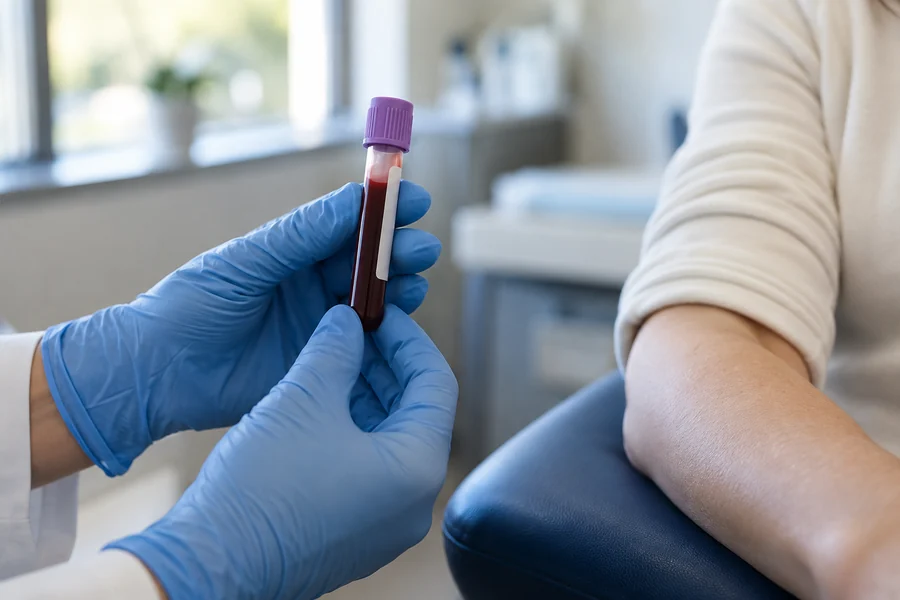 CholesterolHigher levels of certain PFAS have been associated with higher cholesterol.Explore the research
PFAS linked to higher cholesterol
Cholesterol is one of the things checked in a routine blood test. Researchers have examined whether PFAS exposure is connected with the amounts of cholesterol and other fats in the blood.
A 2023 analysis combined findings from 29 publications involving adults. Higher levels of PFOA and PFOS were associated with higher total cholesterol and LDL cholesterol, often called “bad” cholesterol. By bringing multiple studies together, the researchers examined a pattern across different groups of people, rather than relying on a single study.
Read the research
 Immune responseSome PFAS have been linked to a weaker antibody response after vaccination.Explore the research
PFAS linked to weaker antibody responses
The immune system helps protect us from illness. Antibodies are one part of that protection: they help the body recognize and respond to particular threats. Researchers can measure antibody levels to learn about the immune system’s response.
A study following children in the Faroe Islands measured PFAS in blood and antibodies to tetanus and diphtheria vaccines. Higher PFAS exposure was associated with lower antibody levels. This research focused on how the children’s immune systems responded after vaccination, adding immune function to the health concerns studied in connection with PFAS.
Read the research
 Liver healthStudies have connected some PFAS with blood-test changes that can signal liver injury.Explore the research
PFAS linked to signs of liver injury
The liver helps process nutrients and other substances that enter the body. Researchers studying PFAS have looked at liver enzymes—substances measured in blood that can provide information about liver health.
A 2022 review examined human and animal research on PFAS and liver injury. Its analysis of human studies found that PFOA, PFOS, and PFNA were associated with higher levels of ALT, an enzyme that can rise when liver cells are injured. The findings connect particular PFAS with measurable changes relevant to the liver.
Read the research
 Thyroid functionResearch has linked PFOA exposure with thyroid disease.Explore the research
PFAS linked to thyroid disease
The thyroid is a small gland in the neck that helps regulate how the body uses energy. Because its hormones influence so many everyday functions, changes in thyroid health can matter well beyond the gland itself.
A 2014 study examined thyroid disease in a community and workforce with high PFOA exposure. Researchers reviewed medical records to confirm diagnoses and reconstructed participants’ exposure histories. Among women, higher estimated exposure was associated with thyroid disease, including both an overactive and an underactive thyroid.
Read the research
 Metabolism & body weightStudies have explored links with diabetes and childhood weight.Explore the research
PFAS linked to diabetes and body-weight changes
Metabolic health includes how the body manages blood sugar and weight. PFAS researchers have examined these questions at different stages of life.
A U.S. study followed 1,237 midlife women who did not have diabetes when the research began. Higher levels of certain PFAS, including PFOA and PFHxS, were associated with developing diabetes during follow-up. A separate analysis of eight U.S. pregnancy cohorts found that higher prenatal levels of some PFAS were linked with slightly higher body mass index or a greater likelihood of overweight or obesity at ages two to five.
Read the research
 Ulcerative colitisA study connected greater past PFOA exposure with this inflammatory bowel disease.Explore the research
PFAS linked to ulcerative colitis
Ulcerative colitis causes lasting inflammation in the large intestine and can disrupt daily life. It is one of the digestive conditions researchers have studied in connection with PFAS.
Researchers examined more than 32,000 adults in the Mid-Ohio Valley. They reconstructed past PFOA exposure and checked reported diagnoses against medical records. Their analysis included 151 confirmed cases of ulcerative colitis. The disease became more common across groups with greater estimated cumulative PFOA exposure, linking this particular PFAS with an important digestive-health concern.
Read the research
Purchase inquiry
Tell us about your purchase.
All fields are required. Please do not include medical records, confidential information, or time-sensitive requests.
Ledezma Nuño Law is investigating consumer products containing PFAS and the representations made to consumers about those products. The investigation may involve consumers throughout the United States.
Please do not include medical records, confidential information, or time-sensitive requests in your inquiry. Contacting the firm does not create an attorney-client relationship or establish eligibility for a claim. Any potential claim depends on its facts and applicable law.